Summary
The U.S. housing market continued to show modest improvement in June, with pending home sales increasing 4.2% compared to the same time last year. Although mortgage rates remain relatively high, they are still lower than they were last summer, giving some buyers greater purchasing power.
Economic conditions have also become more favorable. Inflation concerns have eased, oil prices have declined, trade tensions have softened, and the labor market is showing signs of improvement. These factors are helping boost consumer confidence and encouraging more people to buy homes.
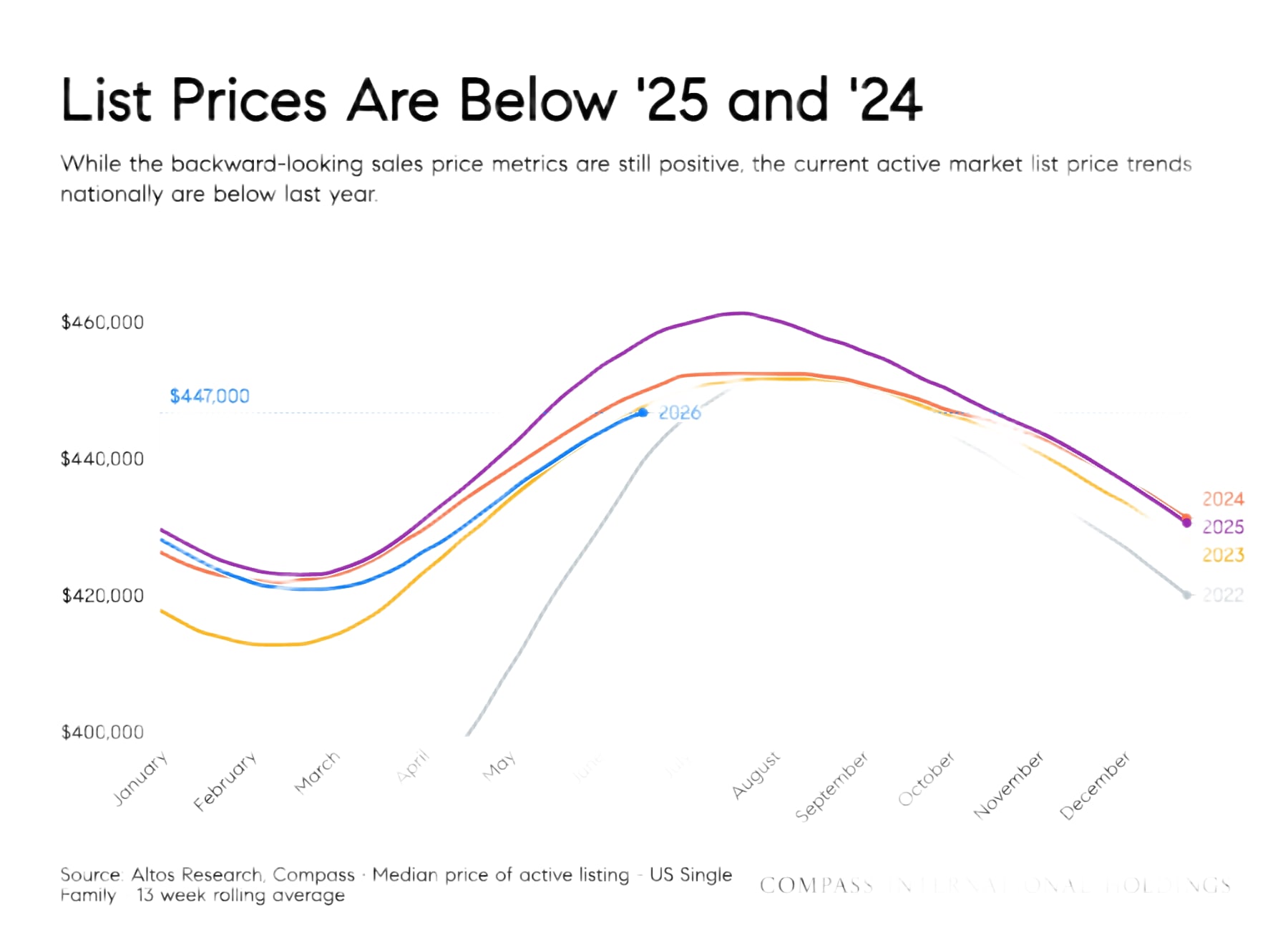
Home prices have remained relatively stable, with asking prices about 3% lower than a year ago while actual sales prices are still approximately 1% higher. Meanwhile, the new construction market continues to face challenges, with inventory levels reaching their highest point since mid-2022 as sales slow.
Key Takeaways
- Pending home sales are up 4.2% year-over-year.
- Mortgage rates remain elevated but are 30–40 basis points lower than last summer.
- Inflation has eased, supporting lower interest rate expectations.
- The labor market is improving, helping increase housing demand.
- Home prices remain relatively stable nationwide.
- List prices are down 3%, while sold prices are still up 1% from last year.
- New home construction is slowing as inventory rises above 10 months, signaling weaker demand in the new home market.
_____
June’s housing market continues a little growth over the pace of 2025. Year to date, we’ve counted 4.2% more pending home sales than last year at this time. While mortgage rates are near the highs of the year, rates are still 30-40 basis points lower than last summer. Add to that a wealth effect from stock markets near all time highs and a few more Americans are finding the opportunity to buy real estate.
Recently the macroeconomic data has shifted from worrisome inflation and weak jobs, to a more optimistic growth scenario. With a hopeful re-opening of the Strait of Hormuz, oil prices have dropped back nearly to pre-war levels. The president’s tariff war is easing. While the AI buildout still puts pressure on inflation, maybe the worst of the inflation surge is behind us. Any development that helps ease inflation is welcome news for interest rates and consumer spending. Meanwhile the labor market is showing signs of improving finally after a very weak 2025. More hiring means more people relocating for work, and an improved housing market.
Still home sales remain very restricted compared to last decade’s “normal” pace, with NAR’s May data reporting a rate of about 4.2 million per year. Included in the slides below is an illustration from an analysis of the mortgage rate lock-in effect we published to help identify how much home sales might be expected to grow each year as the lock-in effect fades over time.
Home prices meanwhile are roughly unchanged from last year, on average nationally. List prices are 3% below last year while sales prices are still 1% above last year at this time.
New construction and new home sales are notably weaker than the existing homes market. Even as construction slows, the months of inventory for the current sales rate has climbed over 10 months - the most since July 2022.
In this month’s National Market Update, we’re sharing data on all these factors and more. Our goal is always to help you understand what’s happening in the market right now, so you can make the best decisions.
By: Mike Simonsen | Chief Economist | Compass International Holdings
____