

How Tariffs Affect Home Building
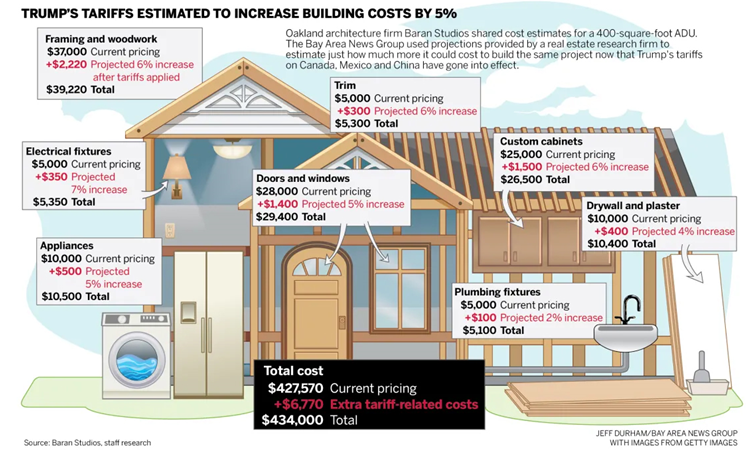
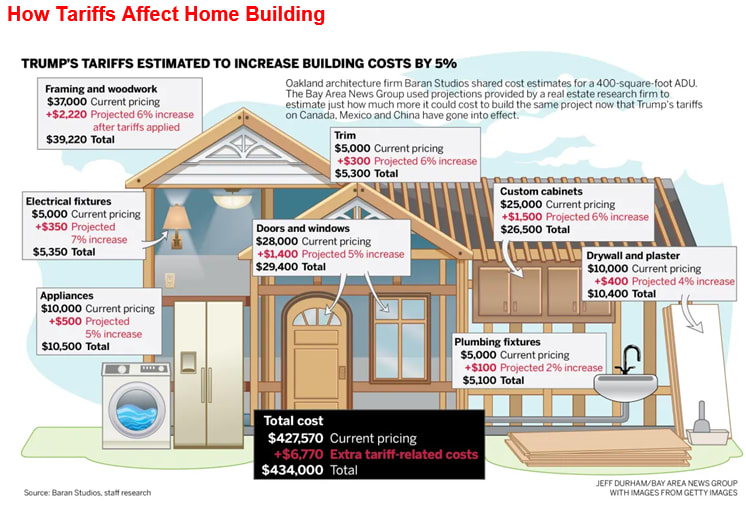
The National Association of Home Builders (NAHB) highlights that tariffs on imported building materials, such as softwood lumber from Canada and gypsum from Mexico, significantly increase construction costs, thereby worsening housing affordability. In 2024, approximately 7% of the $204 billion worth of goods used in U.S. residential construction were imported. Notably, 72% of sawmill and wood products imports came from Canada, and 74% of lime and gypsum products imports originated from Mexico. The U.S. Department of Commerce plans to double the existing 14.5% tariff on Canadian softwood lumber, potentially raising it above 50% later this year. These tariffs, combined with existing ones on materials from China, are projected to increase imported construction material costs by over $3 billion, potentially adding $7,500 to $10,000 to the average new home's price.
NAHB advocates for exempting building materials from these tariffs to mitigate their detrimental impact on housing affordability. They also emphasize the need to boost domestic lumber production to reduce reliance on imports. While the U.S. imports about 30% of its softwood lumber due to insufficient domestic capacity, NAHB supports efforts to expand American timber production. However, they caution that immediate tariff increases on Canadian lumber could harm housing affordability.
In summary, NAHB stresses that import tariffs on essential building materials escalate construction costs, hinder new development, and ultimately burden consumers with higher home prices. They urge policymakers to consider these consequences and seek exemptions for building materials from proposed tariffs to promote housing affordability.